
Good value in precision table saw blades.
The Grizzly T34545 isn’t flashy, it doesn’t pretend to solve every cutting problem, and it doesn’t cost a ton — but that’s exactly why I like it. It does what it says it will: clean, stable cuts with less vibration, good edge life, and a finish that will make your sanding go faster. For most woodworkers — from hobbyists to small shop pros — it’s a blade that earns its spot in the stack.
At the end of the day, the Grizzly T34550 feels like a blade that’s thoughtfully built with real shop use in mind. It doesn’t try to be a specialist in just one type of cut — it’s a true combination blade that cuts clean, resists wear, and doesn’t bog down your saw. For anyone building furniture, cabinetry, or general shop work, it earns its spot as a go-to blade that works as hard as you do.
Manufacturer: Grizzly
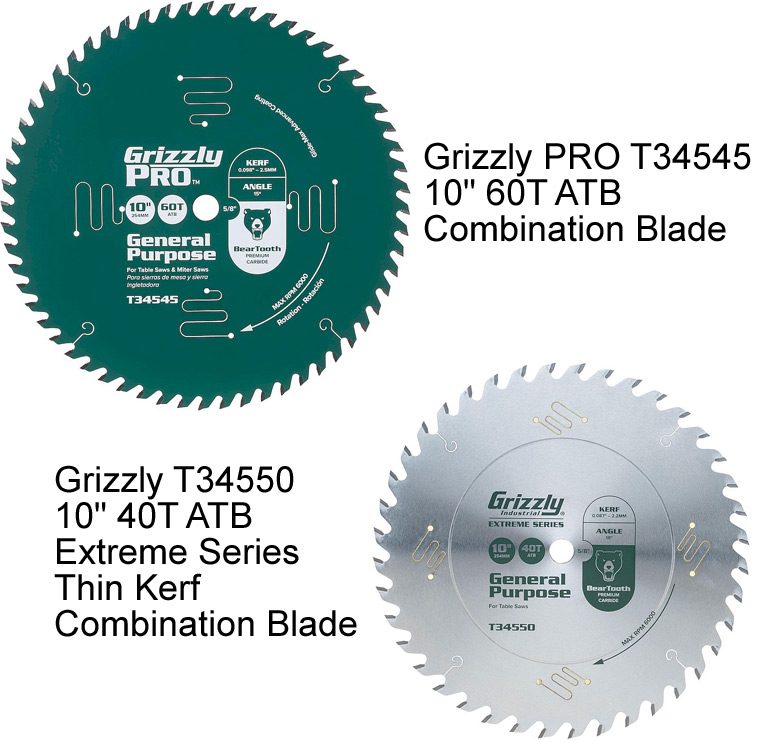
Models: T34545 – Grizzly PRO 10″ 60T ATB combination blade
T34550 – Grizzly 10″ 40T ATB Extreme Series thin kerf combination blade
Price: $31.95 US (T34545); $64.95 US (T34550)
Warranty: 3 year limited
Source: Grizzly.com
Key Features:
T34545
- 60 teeth at 15° ATB
- C4 carbide
- Can be sharpened up to 3 times
- GlideMax advanced non-stick coating
- CNC heat-brazed carbide tips
- 0.098″ (2.5mm) kerf
- SilentCut stabilizer vents
T34550
- 40 teeth at 18° ATB
- C9 carbide
- Can be sharpened up to 3 times
- CNC heat-brazed carbide tips
- 0.087″ (2.2mm) kerf
- SilentCut stabilizer vents
Grizzly PRO T34545 – 10″ 60T ATB Combination Saw Blade
Right out of the gate, this Grizzly PRO T34545 stands out as a versatile all-around performer in the combo blade category. It’s a 10-inch, 60-tooth blade with an Alternating Top Bevel (ATB) design that makes it capable of handling both ripping and crosscutting without feeling like a compromise. That blend of performance isn’t revolutionary, but it’s really good for most workshop tasks — especially if you don’t want to swap blades constantly.
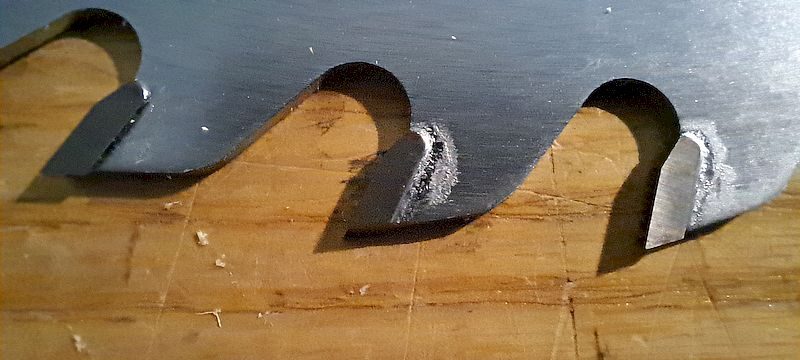
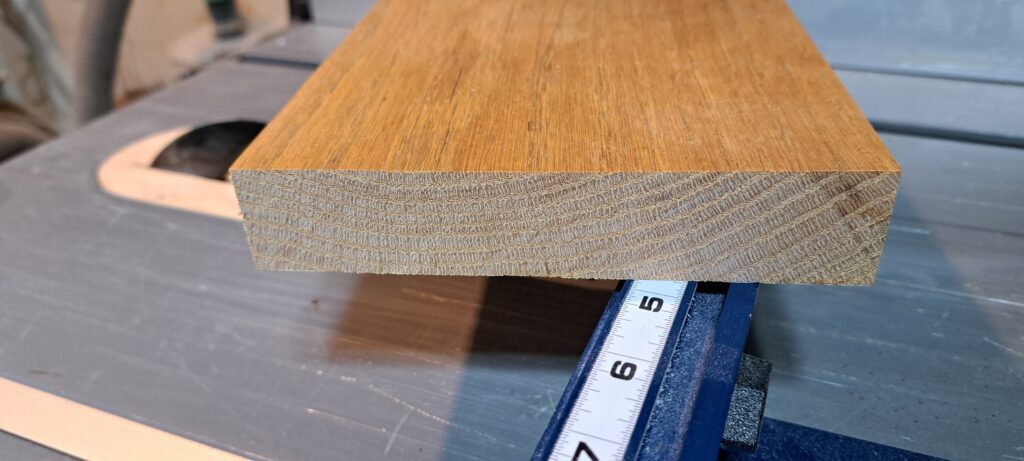
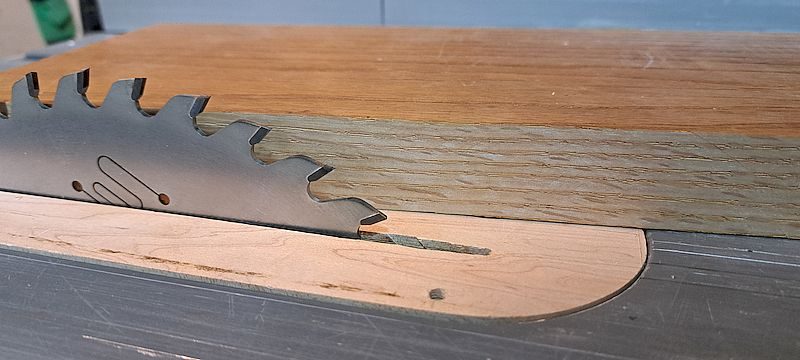
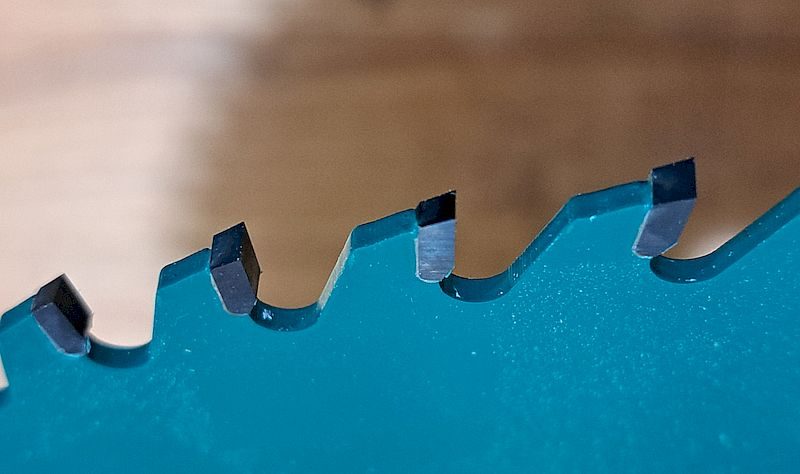
The tooth design deserves a shout-out. With 60 carbide teeth set at a 15° bevel alternating left and right, it slices through wood with minimal splintering and tear-out. Pretty much every grain pattern you throw at it — from soft pine to oak — gets a cleaner cut than cheaper general-purpose blades. More teeth equals more contact points, and that’s why the surface finish here often looks like it came off with a smoother than expected.
Durability is a big part of the appeal. Grizzly uses what they call BearTooth C4 carbide, which feels noticeably harder and longer-lasting than the run-of-the-mill carbide you see on bargain blades. They claim you can re-sharpen it up to three times, which for a blade in this price group is a nice bonus. Overlay that with the GlideMax non-stick coating and the cuts feel smoother with less heat buildup — a detail I appreciated during long sessions.
On vibration and noise, Grizzly has added SilentCut stabilizer vents that genuinely make a difference. Not only does it feel more stable on the saw, but you also get a quieter, more accurate cut. That kind of refinement isn’t common on mid-range blades, so that was a pleasant surprise.
Compared with similar blades in the same family the T34545 sits right in the middle. 40-tooth blades will remove material faster but leave a rougher finish and can chatter a bit more on crosscuts. They’re fine for rough work, but you’ll spend more time sanding.
On the flip side, 80-tooth blades will give you super-smooth finish cuts — ideal for fine joinery or furniture parts — but they’re slower and less forgiving on rips.
The T34545’s 60-tooth count makes it kind of a “sweet spot” — good enough finish on crosscuts and still respectable speed on ripping. In everyday shop use, that balance is gold because it means fewer blade changes without sacrificing much quality. If you’re cutting primarily plywood, veneers, or delicate stuff all day, an 80T is nicer. If you’re just roughing lumber in preparation for joinery, a 40T might work better. This 60T sits right between them and does both reasonably well.
This blade isn’t just “for beginners” — it’s one I’d happily recommend to anyone who needs reliable workmanship without shelling out for highly specialized blades. Because it handles rips, crosscuts, plywood, and treated wood well, it’s perfect for hobbyist woodworkers building furniture, cabinets, or small projects, DIYers who want one blade that does most tasks well enough and woodworkers who value versatility and economy.
For everyday woodworking — from framing parts to final trim cuts — the T34545 is a solid, no-nonsense choice.
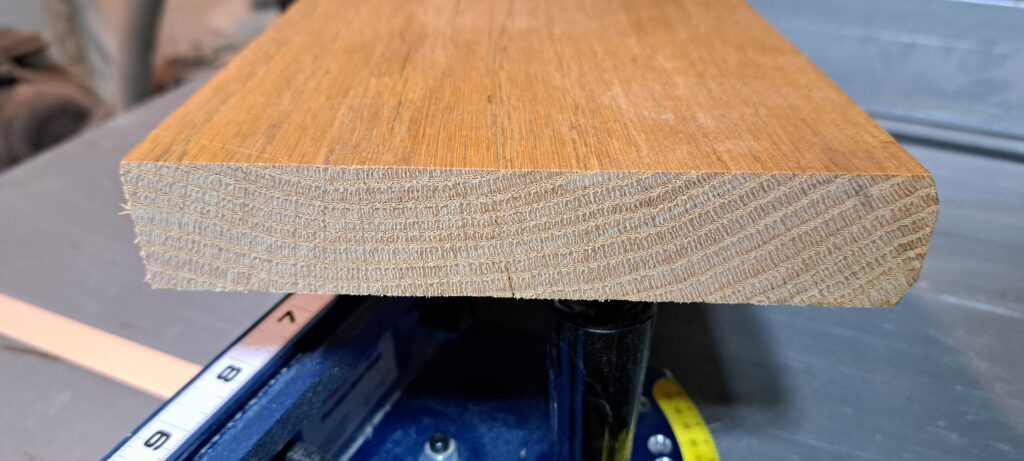
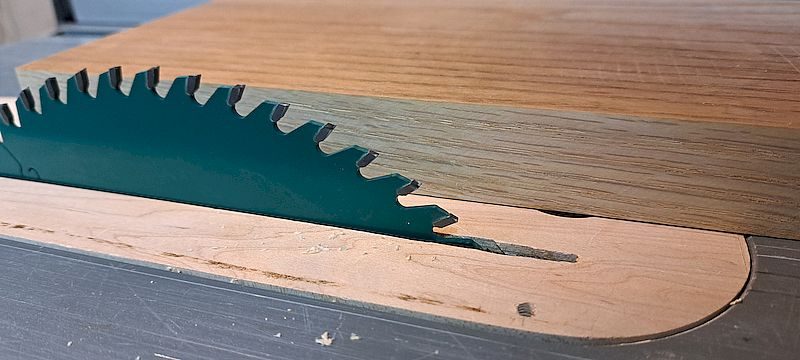
Grizzly T34550 – 10″ x 5/8″ 40T ATB Extreme Series Thin Kerf Combination Saw Blade
Right from the first few cuts, the Grizzly T34550 feels like a blade that’s built to work hard without complaining. It’s a 10-inch, 40-tooth ATB (Alternating Top Bevel) blade in Grizzly’s Extreme Series, which means it’s armed with BearTooth C9 carbide. While C4 is a hard, wear-resistant and brittle grade ideal for fine finishes and abrasive materials, C9 is a tougher grade with higher cobalt content, designed for superior impact resistance to prevent chipping in high-shock, demanding environments.The C9 carbide really does stand out — in my experience it resists chipping and dulling better than C4 blades I’ve used, and Grizzly claims it can stay sharp through three re-sharpening cycles.
Right away you’ll notice the thin kerf — about 0.087″ (2.2 mm) — and that’s something I genuinely appreciate when I’m working with hardwoods or ripping a stack of boards. Thin kerf means less resistance, which translates to faster cuts and less strain on the saw. If you’re running a 1.5 HP or 2 HP saw, you’ll feel the difference in feed-through and smoother pull-down.
The 40 teeth with an 18° ATB grind give the blade a nice balance — it’s aggressive enough to rip effectively along the grain but still leaves a solid finish on crosscuts compared to a pure ripping blade. I noticed fewer splinters and cleaner edges than with cheap blades, and the alternating bevel helps minimize tear-out even on figured wood and plywood.
Similar to what you’ll find on the T34545 are SilentCut stabilizer vents, which reduce vibration and noise and make the blade feel more stable under load.
The T34550 sits in that sweet middle ground where it’s more capable than the very basic blades but not as specialized (or expensive) as dedicated finishing or high-tooth combo blades. The blade feels noticeably more refined in both build quality and cut finish — especially over prolonged use. The carbide is tougher, the noise and vibration are lower, and the cuts feel cleaner out of the box.
Compared to a higher-tooth finish blade like the highly rated Freud Diablo Ultra Finish 10″ 60T Blade, the T34550 won’t deliver the same glass-smooth crosscut you might crave for fine cabinetry or veneer work — but that’s not really its lane. The Freud is exceptional if you’re chasing pure finish quality at every pass, while the Grizzly blade is more about well-rounded performance with serious durability.
Where the T34550 really shines is that it still removes material efficiently but also leaves a decent edge that often saves me a bit of sanding before glue-ups or joinery.
This is the kind of blade I’d recommend if you’re after a versatile, hardworking combo blade that’s more robust than the budget stuff but not screamingly specialized. It’s a good match for mid-power table saws — the thin kerf really helps reduce load on the motor and improves cut feel on saws that aren’t industrial-grade.
If you only care about ultra-fine finish cuts or you’re doing a lot of veneer and instrument-level work, a higher tooth count blade (60T or above) might be worth the investment. Conversely, if you’re mostly ripping huge timbers where finish doesn’t matter, a very low tooth count ripping blade could be faster — but I think most woodworkers will find the 40T combo to be a great compromise.