[aioseo_breadcrumbs]
TIPS & HOW TO
The Difference: stains and dyes

Carl Duguay
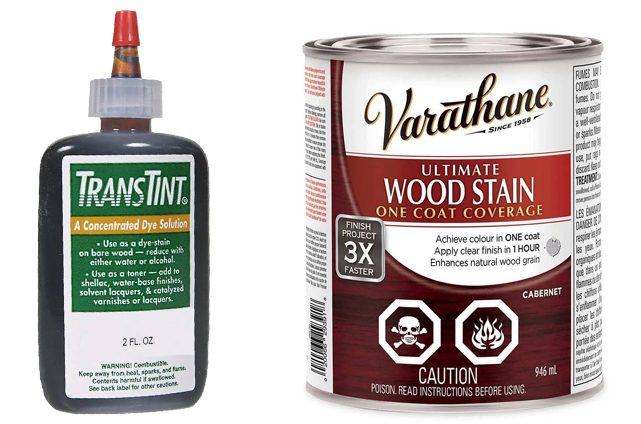
Some woodworking tools, terms and techniques can be confusing. Here, we’ll help you make sense of the finer points of woodworking so you can make the right decision for your situation.
Both stains and dyes are used to colour wood.
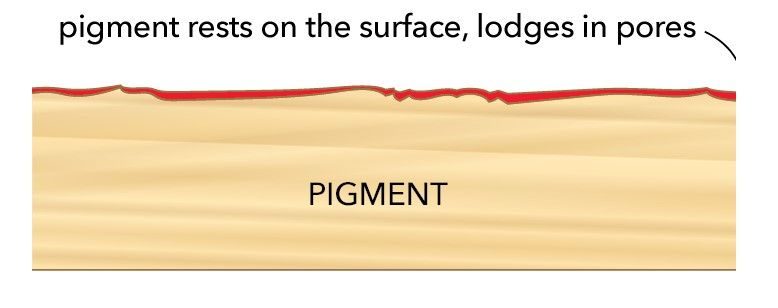
Stains usually consist of a finely ground coloured pigment, a carrier and a binder. The carrier (also known as a solvent) can be mineral spirits, lacquer thinner or water, which spreads the pigment over the wood surface. The binder (such as linseed oil) bonds the pigment to the wood. Some stains also contain a mixture of pigment and dye. Similar to paint, stains remain on the surface of wood, lodged in pores and surface scratches. They produce a more opaque or subdued look that tends to obscure the wood grain and figure.
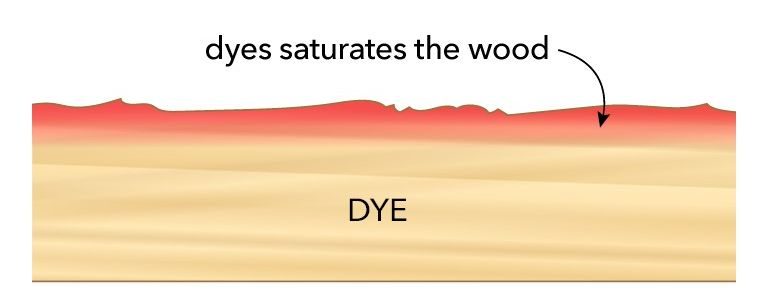
Dyes, which are available as a powder or concentrated liquid, are dissolved in a carrier (oil, water or alcohol) and don’t require a binder. Dye molecules remain suspended in the carrier and, unlike stains, don’t settle out. They penetrate more deeply into the wood’s surface than stains. Because they’re translucent, dyes don’t obscure the grain in wood, which makes them ideal for use on highly figured wood. They can create a more even colour across different wood types and are less likely to result in blotching. Of course, as with a stain, you still need to add a topcoat over the dye.