
FROM ROB'S BENCH
Against the grain

Rob Brown
Blog for February 26, 2026
One thing all woodworkers can agree on is that wood grain is a wonderful thing. Having said that, many of us may like different features, or characteristics, of grain.
The word “grain” can mean a whole lot of things in the woodworking world. Today, I’m talking about the general look of wood. Essentially, this could even come down to flat cut stock vs quarter cut stock, for this instance. There will be lots of time for us to chat about all the other aspects of grain in future columns.
I enjoy looking at flat cut wood. The curvy cathedrals that are the hallmark of flat cut solid wood are probably the first thing most people think of when they hear the phrase “wood grain”. Viewing a single piece of flat cut wood with those cathedrals is very pleasing to the eye. The challenge comes when we, as woodworkers, have to glue multiple solid wood boards together to create a wider workpiece. When this approach is called for, finding enough pieces of wood, all with very similar overall colour and general grain patterns, can be very difficult. Even if you somehow have multiple boards from the same tree, different parts of that tree have different grain and colour, and some of the boards will seem as if they don’t match very well. Another thing that happens with flat cut wood is it not only shrinks and swells with the changing seasons more than other cuts of wood, but it also leaves us with a slightly curvy, undulating surface.
A solution
Some woodworkers would say that this is just a part of working with a non-homogeneous material like wood. Its imperfections are what makes it so appealing. I can certainly understand this mindset and don’t disagree with it.
For me, there’s a time for that type of flat cut look, but there’s also a time for a simpler, more refined, look. When I want this type of look, I often turn to veneer. Not only can veneer often be sourced in wider pieces than solid wood, but because it’s sold as it was sliced from the tree, and the mating pieces are almost a carbon copy of each other, the colour and general look throughout the pieces will be virtually identical. Both of these factors mean veneer can usually look more uniform across a wider workpiece.
Another approach I sometimes use when I want a simple, more refined look takes a fair bit of extra time and care, but can leave you with a really nice effect. If you rip the flat cut material into narrower strips, rotate them 90° and glue them all back together you’ll get a much more uniform-looking panel. There are many times when the final look won’t look as attractive as you hoped for, but if you start with a large enough board, and think the process through carefully, the final look can be almost calming. When cutting into a flat cut board, I generally rip strips about 3/16″ wider than the final thickness of the workpiece I’m trying to make.
Juggling the sapwood / heartwood can be challenging. Another common challenge with this approach is obtaining enough wood with the same (or similar enough) grain and colour so the finished panel looks good. The situation is always improved if I think through the cuts carefully, paying extra attention to creating a simple, yet repeating, pattern across the finished panel.
But, but….
I can hear some of you now: What if I like the natural variation that flat cut solid wood leaves me with? Perfect, I’d say. If you want that sort of a look, flat cut wood is the perfect material for your project, and there are many projects where I’d fully agree with you. A country-style kitchen harvest table is a great example. Come to think of it, any piece that has a country vibe to it will certainly do just fine with flat cut wood. This type of furniture was designed to be functional, and use the material that was around the area where furniture makers and their customers resided.
In today’s modern world, there might be a more refined or formal look you’re going for, and that’s when a different approach might be called for. There’s nothing truly wrong with the standard approach of laminating flat cut boards together, but just know that there’s another option, if needed.
Clamp Those Strips Up
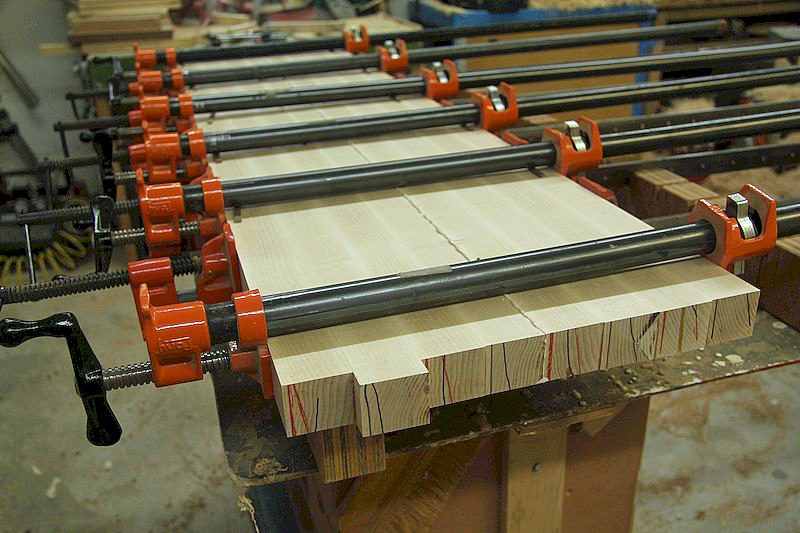
Once I ripped the 8/4 stock into 1-1/2" wide strips, I rotated them and glued them back together. Notice the red and black lines on the end grain of the strips; these helped me orient them in the final workpiece to leave me with a simple, repeating pattern across the entire piece.
Coming Together
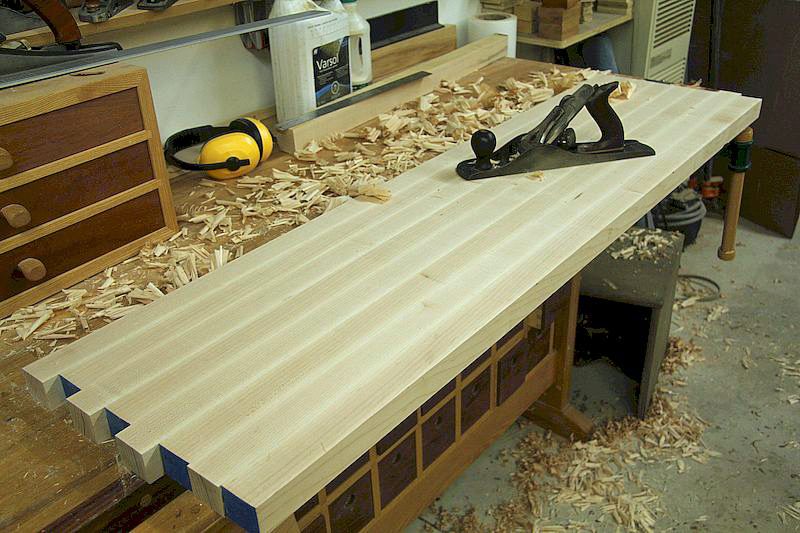
Out of the clamps, it's starting to look like the more refined panel I was hoping for. The light sections of each strip repeat across the tabletop evenly to leave me with a uniform effect.
Side Table
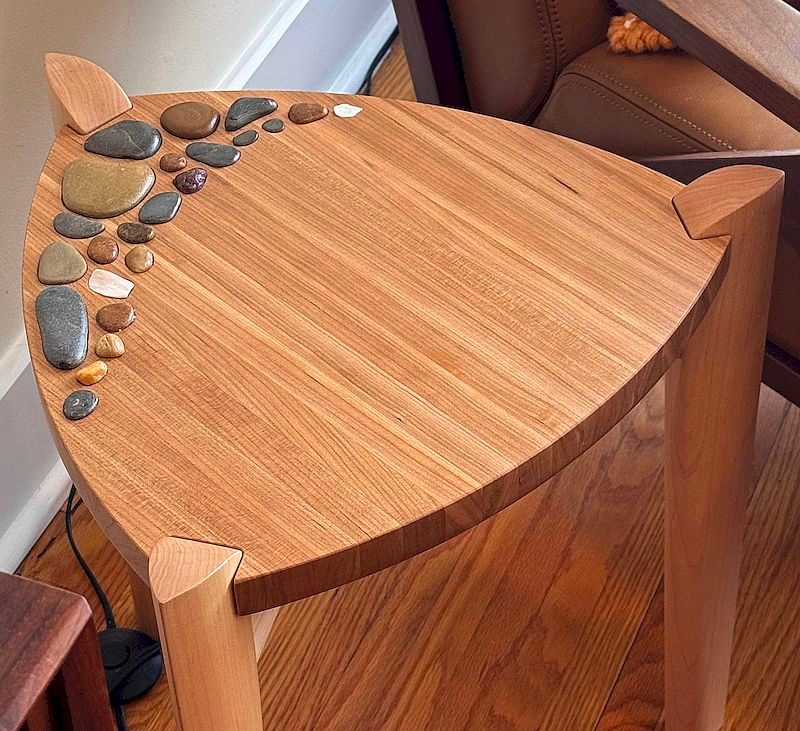
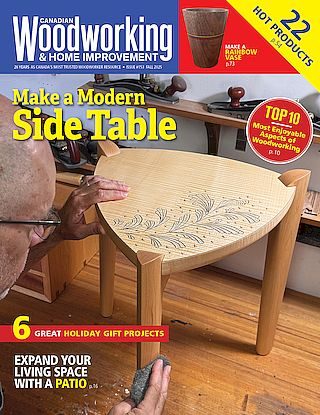
I wrote about this table I made for my wife in past columns, and it also appeared on our Fall 2025 cover, but with a different top. I recently made another top for the base, using the lamination technique to rip and re-orient the strips before I glued them back together. Don't tell my wife, but I didn't do as nice of a job with this lamination as I did with the larger table top in the other photos above. The strips were brought in from multiple boards, meaning colour and grain aren't as uniform as they could have been. It's yet another example of the cobbler's family having to ever so slightly suffer. Maybe one day soon I'll detail how I made this top with all the embedded stones in it.



Yes, do tell (about the embedded stones).