Matthew Thornhill
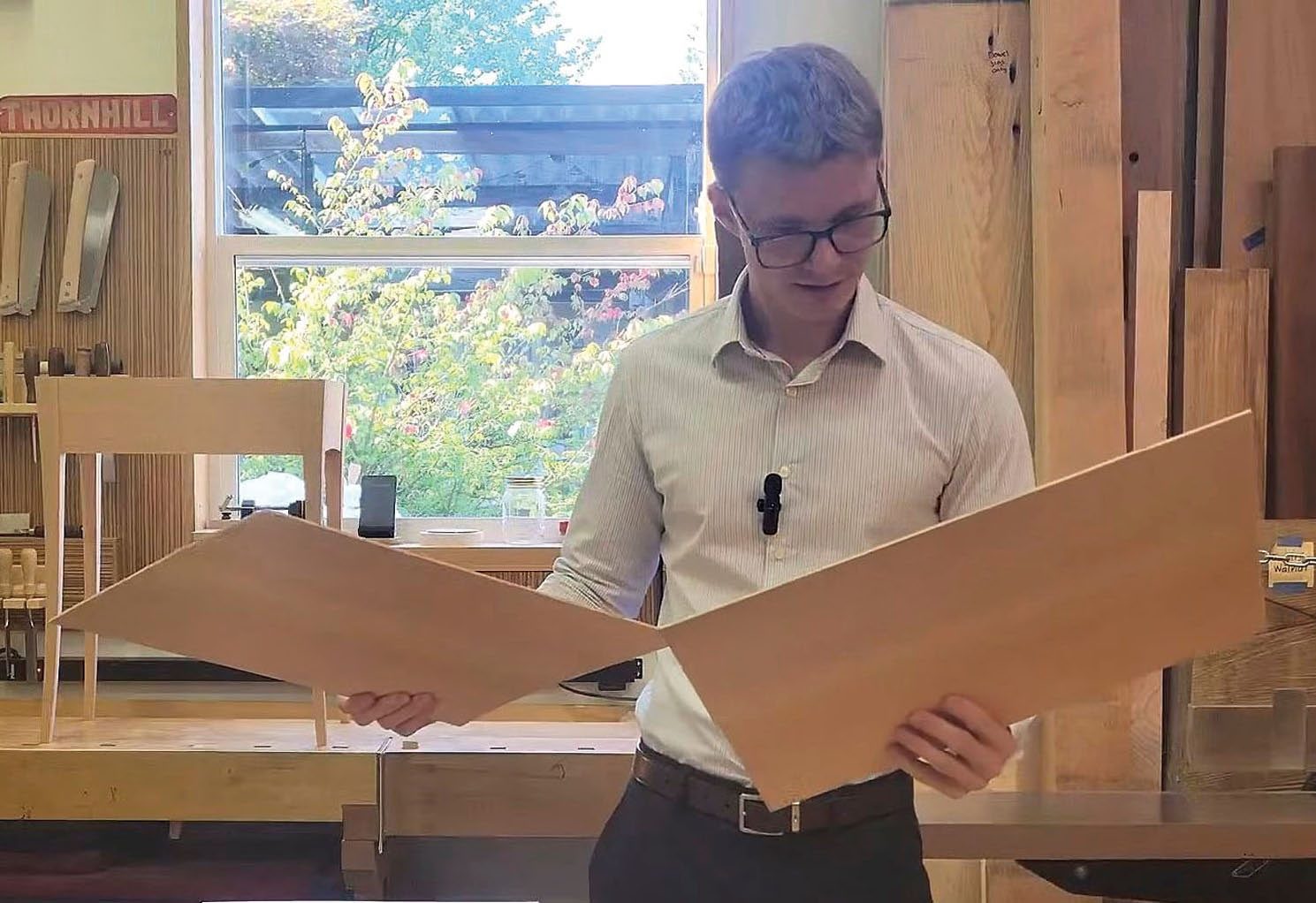
New Westminster, BC based furniture maker Matthew Thornhill on dovetails, being critical and working in a two-car garage.
Business:
Fine Art Furnishing inc.Matthew Thornhill interviewed by Editor Rob Brown | February 2026
How long have you been building furniture?
About 12 years, including my high school years.
What sort of furniture do you specialize in?
Traditional furniture with an emphasis on hand tools.
Tell us a couple of interesting things about your personal life.
I have an interest in philosophy, and have spent a great deal of time reading about self-help. I love old vehicles; I drive a white 1993 F250 and a blue 1968 Mustang, which I have been taught to do quite a bit of work on. I’m active; I go to the gym often and choose to walk all over town.
Do you prefer hand tools or power tools?
I prefer hand tools, but machines are important.
Solid wood or veneer?
Solid wood is always preferable. I use shop-sawn veneer on lumber core, and it’s still wonderful work.
Figured wood or straight grain?
Both have their place. Figured wood in moderation if I was specific.
Inherited Vintage Stanley Sweetheart or fresh-out-of-the-box Veritas?
I prefer new hand tools.
Flowing curves or geometric shapes?
I enjoy curves, but I’m not opposed to straight lines, either.
Favourite wood?
Usually, I’m ready to move on to a new wood after a piece is completed.
Least favourite wood?
Poplar.
Photos of Matthew Thornhill
Matthew Thornhill
“Companion Tables”
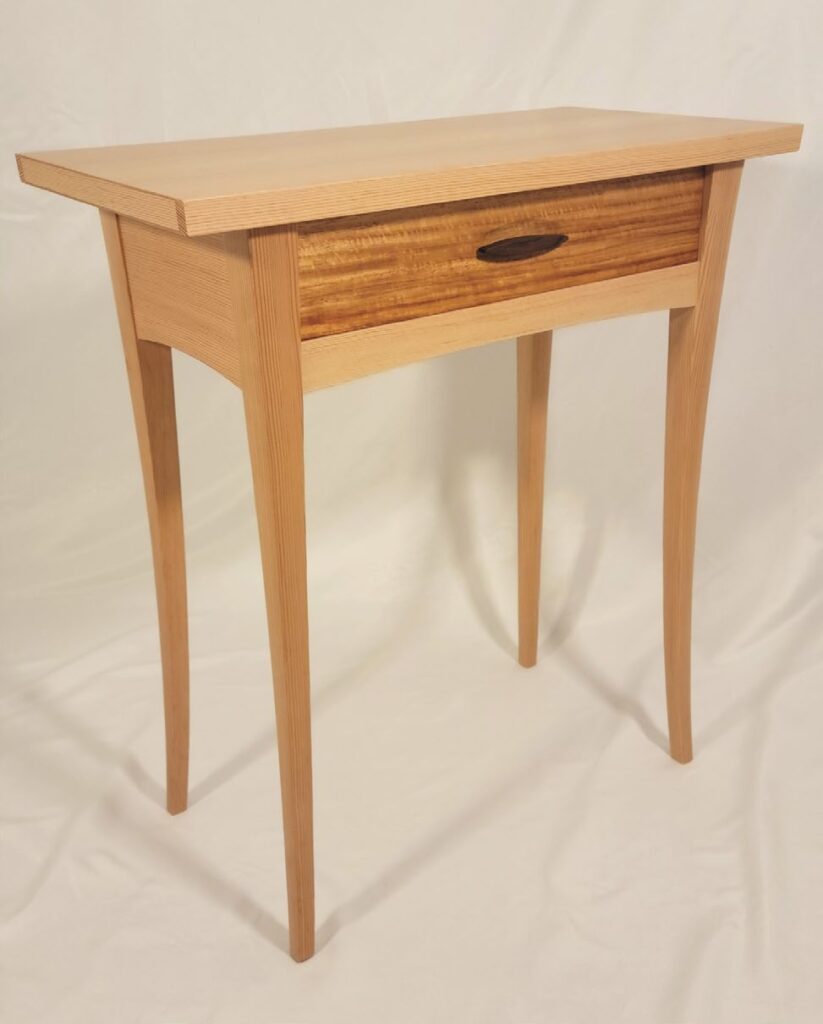
Inside the compartment is a box. Thornhill feels drawers appear messy, even when organized, so he wanted to create some order within this area. One side of the removable box fits a book, while the other side is a place for smaller items and has a lid.
“Mirror in Fir”
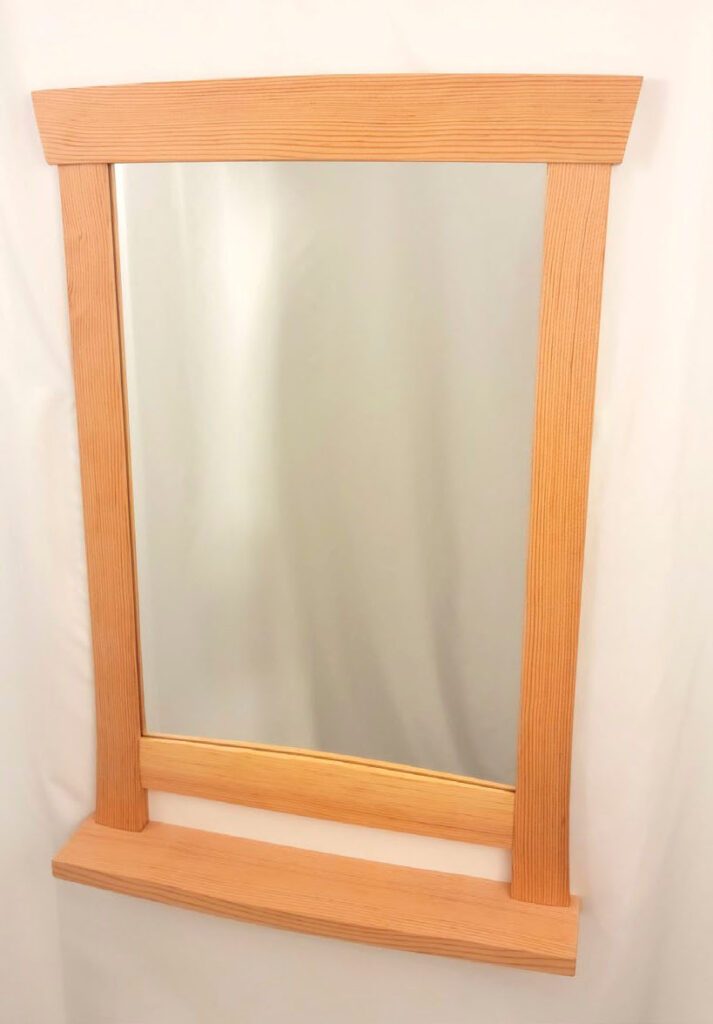
Designed with many curves in all directions, this Douglas fir mirror was shaped with a spokeshave to allow the curves to be fine-tuned to please the eye.
Clock Tower
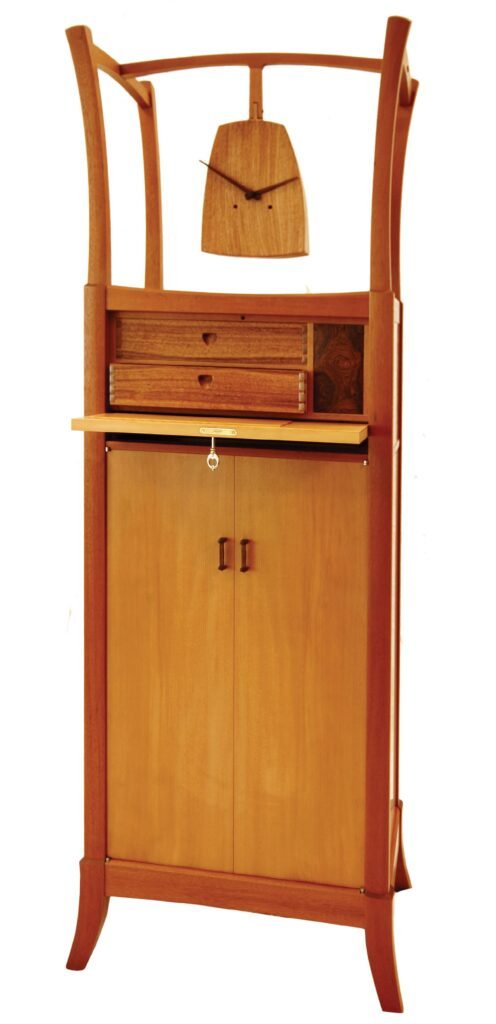
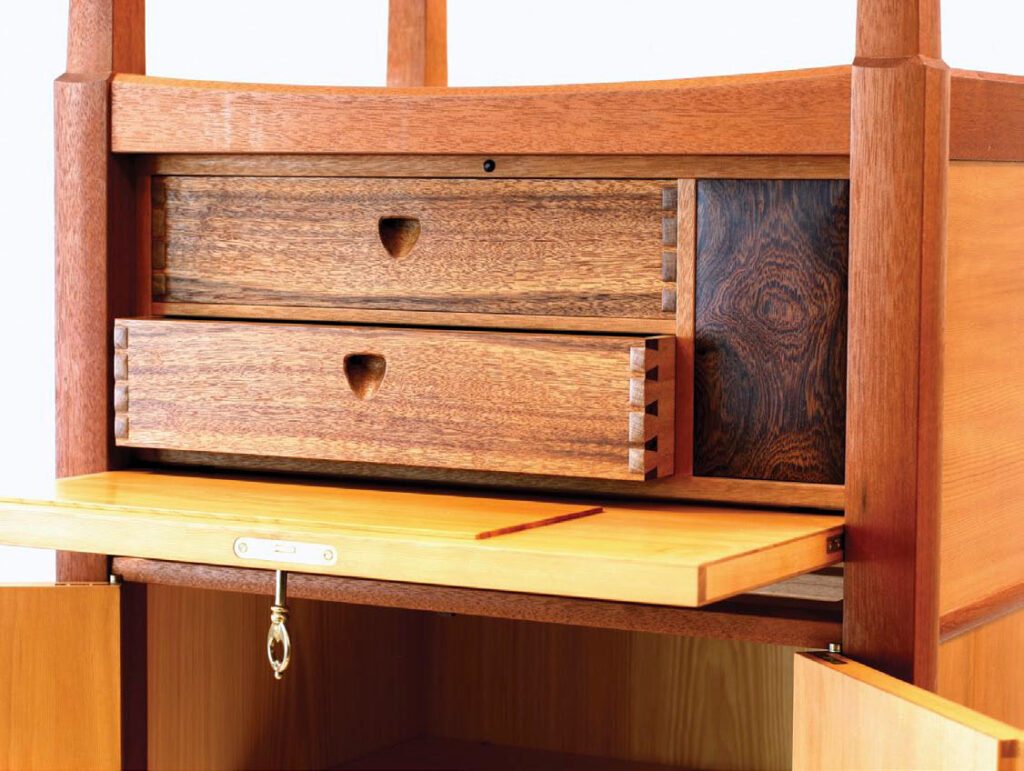
This piece was built during 3-1/2 terms at Inside Passage School of Fine Cabinetmaking, Gibsons, BC. Behind the drop-door are two drawers and a small pull-out box. The small box is held in place with a wooden catch that can only be accessed from underneath. The inside surface of the drop-door has a small panel that accepts the underside of the box perfectly. Also, the shape of the door pulls mimics the shape of the top rail that supports the clock. This is one of Thornhill’s favourite details about the piece.
Clock Tower detail
Quotes from Matthew Thornhill
My studio is a two-car garage in my parents’ backyard; they have been very supportive of my woodworking journey.
The shop has taken me a long time to organize and build. My stored wood has matured in the shop for a few years, which is ideal.
I love dovetails. My paring chisel is my favourite tool; I like to add as many pins as possible while retaining the best appearance and add a slight curve before fitting the pins to the tail board. It takes time, but this is a special time in the shop that requires little machining. My last experience dovetailing was three weeks long, so they offer a lot of valuable thinking time.
Being from Inside Passage School of Fine Cabinetmaking, the trail of design influence would be Robert Van Norman, James Krenov, and Carl and Vidar Malmsten.
These days I sketch until I like something. The “Companion Tables” started as a simple sketch, then I began to build them, allowing the curves of the supports to influence the rest of the build. Furniture needs to be entirely functional and understand that it is furniture, however. I believe the quality of work should incentivize the user of the furniture to treat it as the piece of art it is.
My work shows my dedication to producing to the best of my ability. My work is organized and clean, with a strong effort to be compassionate and respectful to the resources and environment it’s in. It’s quiet, calm, firm and ready to be appreciated.
I am very critical of my own work and have very high expectations for it. Often, I will complete a task on a piece and immediately solve the issues I encountered around the shop. This always leads me to achieving higher standards the following time, but means I must live with knowing I could have done better throughout the rest of the piece. This method of working keeps me honest, humble and very progressive. This is the message I aimed for with the “Companion Tables”.
A hand-built piece of furniture entirely changes the room it’s placed in. I would like my work to be inspiring to anyone who tries hard at what they do and incorporate messages that attempt to unify, improve and to do the best I am capable of.
“Clock Tower” is my best work. This was completed at school and has set my expectations for myself. The woods are Goncalo alves, yew, yellow cedar, Agathis and an unknown wood. Behind the drop-down door are two drawers and a time capsule. This box is held in the compartment with a hidden wooden latch and a wooden spring. The clock is narra with a brass mechanical movement and Brazilian rosewood hands. This piece took a year working full time at school to build. The amount I learned from building this was incredible and is the leading factor in the quality of work being produced in my own shop.
“Companion Tables” are my most detailed pieces completed in my own shop to date, and are built in fir. They’re soft and delicate in appearance but stand tall with confidence. They boast many curves. The compound-curve veneered bottom is its main exterior feature. The pull box features my tri-piece joint and a sliding lid to cover the items placed in the box.
Our video of the work of Matthew Thornhill