

Tools scattered across old plywood benches, while a fluffy layer of sawdust clung to the paintbrushes, putty knives, and used paint rollers hanging from bent nails along the wall. Most days I was cutting wood or gluing up some crooked little board. But sometimes, when I couldn’t find a scrap to build with and the fireplace had already eaten the good offcuts keeping winter’s cold fingers outside, I’d clean the shop.
Everything had its place.
Sawdust swept into the bin.
Order restored.
And if all that was done and my “shop time” still wasn’t satisfied, I’d pull the old tools out from below the bench.
A plywood box with mashed corners, stained black from grease and years of dampness that seeped through the basement walls. Grandpa’s tools were inside — heavy with old metal, memory, and loss. Beneath layers of cobwebs, sawdust, and the occasional dead cricket, a secret forgotten but still felt. I’d slide that old box out and let the soft yellow light of the room reveal what it could.
The sawdust smelled old — that unmistakable blend of tool oil, light rust, and the kind of nostalgia only Grandpa’s shop could hold.
A bit brace with a set of augers.
An old steel electric drill.
A hand plane.
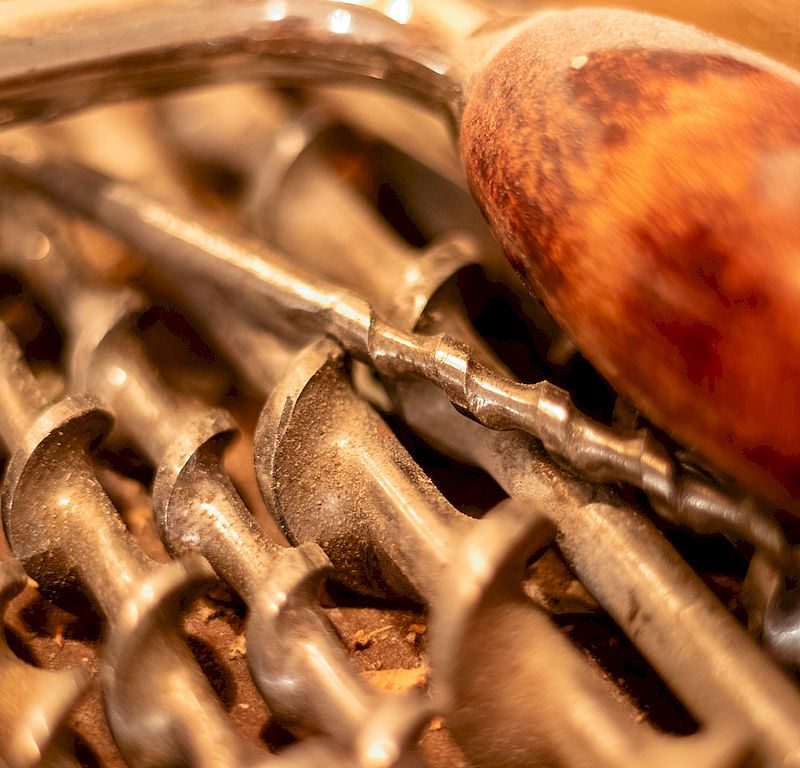
Chisels with edges long dull, their sharpness gone as Grandpa’s shaky hands could no longer bring them back.
I understood the drill.
But the bit brace? That thing was a mystery. I’d practice with it, drilling holes full of tear-out and disappointment, wondering why Grandpa needed such a tool, where he got it, and what he used it on. The truth, of course, was simple: power cords used to be too short. This was cordless before cordless was cool.
But as neat as it was, the bit brace had no sway over me like the hand plane did.
That plane…
Dark wooden knob and tote.
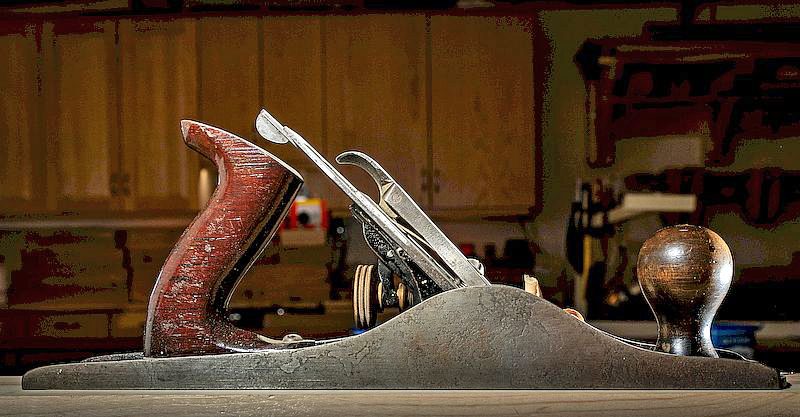
Metal with a light rust and a roughness, a deep gray patina from years of storage and damp basement air. Grooves along the sole and old bits of wood still curled at the blade.
Old-world craftsmanship in every line.
Brass screws turned brown with dried oil and time.
I didn’t know what it was for, but I knew exactly how it was meant to be held. I’d turn it over in my hands, studying every curve and screw, feeling the weight of it, imagining the work it once did. I’d dust it off and rub a coat of oil on its surface, knowing that one day I’d figure this thing out.
Then I’d place everything back in the box, slide it under the bench, turn off the lights, and head upstairs. I’d wash my hands, watching the grease and tang of old metal swirl down the drain.
That was decades ago — more than I care to count — but here we are.
That box is probably still in Dad’s old workshop, smelling the same, with a few more dead crickets inside.
The tools live in my shop now.
The bit brace sits in a drawer, taking up space, waiting for its moment in the light again. But the hand plane? I figured that one out. It’s restored, loved, and part of a collection where dozens of planes sit lined up together — all because of Grandpa’s old toolbox. It’s the only plane that passed from his hands to mine, and now I use it all the time. I smile as Leo, my son and apprentice, discovers the same lessons it once taught me. And with tools scattered across plywood benches, I’m proud to watch how these tools are shaping him into the craftsman he’s becoming.
Woodworking is more than cutting joints and shaping boards. For many of us, it’s tied to memories, influences and moments that shaped who we are — both in and out of the shop.

Think back to what first drew you to woodworking. Was it a family member, a school shop class, a book or magazine, or simply the urge to make something with your own hands? Maybe it started as a way to fix things around the house and slowly became something more.

Consider what woodworking means to you today. Is it a creative outlet, a way to slow down, a challenge that keeps your mind sharp, or time set aside just for yourself?

We invite you to share your story. Whether your journey began decades ago or just recently, your experiences and perspective are part of what makes the woodworking community so rich.

Send your reminiscences to rbrown@canadianwoodworking.com

This story distills for me what I imagine a craftsman to be. Someone whose very essence has been shaped by early experiences. It’s no wonder Knotty Dave creates pieces that will stand the test of time.