[aioseo_breadcrumbs]
TIPS & HOW TO
The Difference: voltage, amp-hour and watt-hour

Carl Duguay
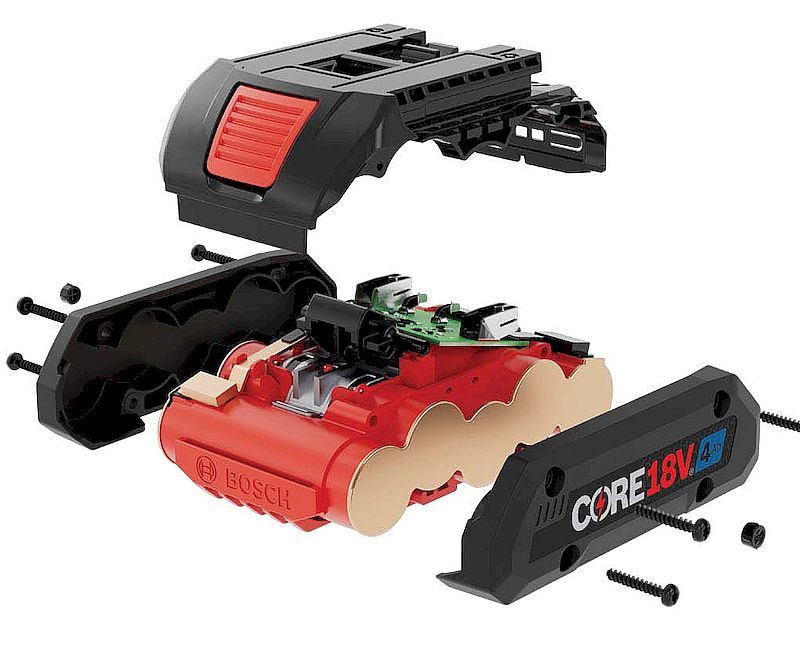
All battery packs are made up of individual cells, each with a voltage (V), often called “nominal voltage”, of 3.6V.
Battery-powered tools typically use one of three battery pack types: 12V (found in compact tools with low power demands); 18V (the standard for most power tools); and 36V or higher (designed for high-demand outdoor tools like gardening and landscaping equipment).
These cells are wired in series to create the required voltage — the electrical potential or power output. A 12V pack has three cells, and an 18V pack has five cells.
Battery capacity is measured in two key ways:
Amp-Hour (Ah) indicates the battery’s storage capacity or runtime. It’s comparable to a car’s gas tank size — a larger Ah means more stored energy and longer operation before recharging. However, runtime varies depending on the tool’s workload and operating environment.
Watt-Hour (Wh) represents the total energy the battery can deliver and is comparable to the total distance a car can travel. Wh is calculated by multiplying voltage (V) by amp-hour (Ah). For example, an 18V battery with an 8.0 Ah rating provides 144 Wh of energy (18 × 8 = 144), while an 18V battery with a 6.0 Ah rating delivers 108 Wh (18 × 6 = 108). A battery with a higher Wh rating will last longer than one with a lower rating, assuming the tool’s power consumption remains the same.
Understanding these ratings helps you choose the right battery for your tools, balancing power needs and runtime.