[aioseo_breadcrumbs]
TIPS & HOW TO
The Difference: rasps, files and rifflers

Carl Duguay
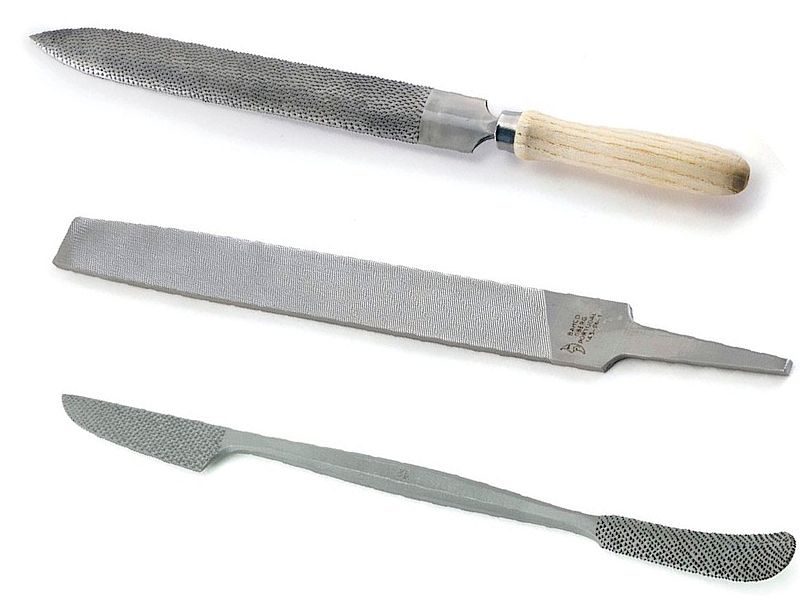
Rasps, files and rifflers are essential hand tools for shaping and smoothing wood, each with unique construction and uses.
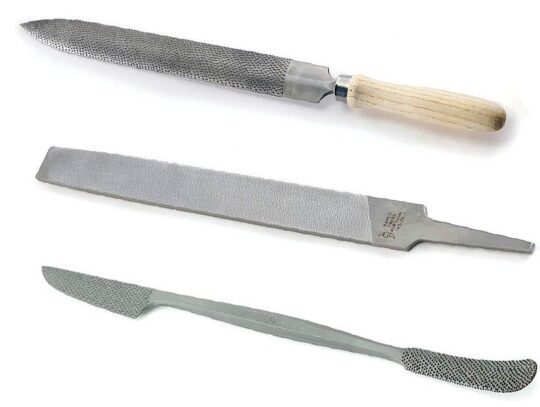
A rasp has individually raised, coarse, cone-shaped teeth, making it the most aggressive of the three, designed to remove material quickly. It leaves a surface that’s rougher compared to that left by a file. Rasps are available in various shapes, sizes and coarseness grades, such as flat, half-round and round. Cabinet rasps have a fine-tooth pattern, wood rasps have coarser teeth and four-in-one (also called four-in-hand) rasps have different teeth patterns and shapes on each side.
A file, on the other hand, has low, tightly spaced rows of teeth cut into its surface. Straight-cut (also called single-cut) files have parallel rows of teeth, while cross-cut (also called double-cut) files have rows running at opposing angles, delivering a more aggressive cut. Although a file can be used on wood for more precise shaping and smoothing, it’s typically used on metal, plastic laminate and wood iron-on edge tape since the teeth tend to clog quickly with wood fibres. Like rasps, files come in various shapes and sizes, including flat, round, half-round, triangular and square.
A riffler has variously shaped cutting surfaces on both ends with a handle in the middle. File-cut rifflers have long lines of teeth, while rasp-cut rifflers have pointy teeth. While rasps and files typically have straight, flat cutting faces, rifflers usually have curved cutting faces. They’re primarily used for shaping concave and convex surfaces. There are eight traditional styles available in different lengths, proportional to the coarseness of the cutting surfaces.