Create an amazing basement workshop
Basements are one of the most common spaces to set up a workshop. With a bit of planning, some forethought and a lot of creativity you’ll be on your way to an efficient, productive basement shop.
Business:
Photos of David Bedrosian
Outside of the Shop
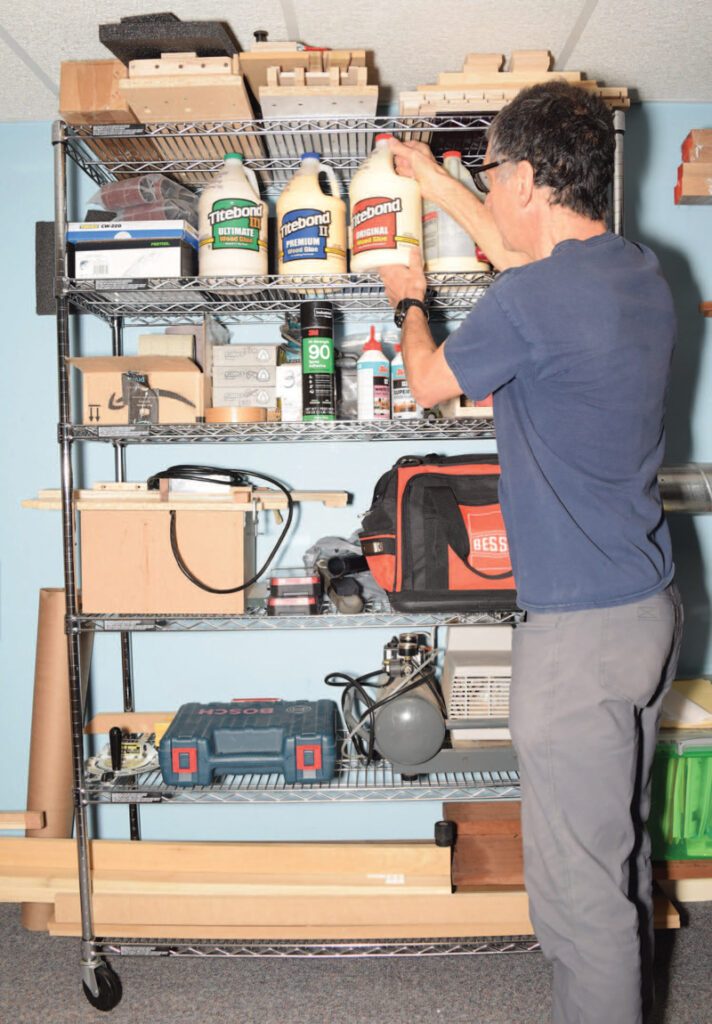
Bedrosian uses wire storage racks elsewhere in his basement to help reduce the clutter. Infrequently used items like extra glue and sandpaper are moved out of the shop onto the racks.
Heavy Moving
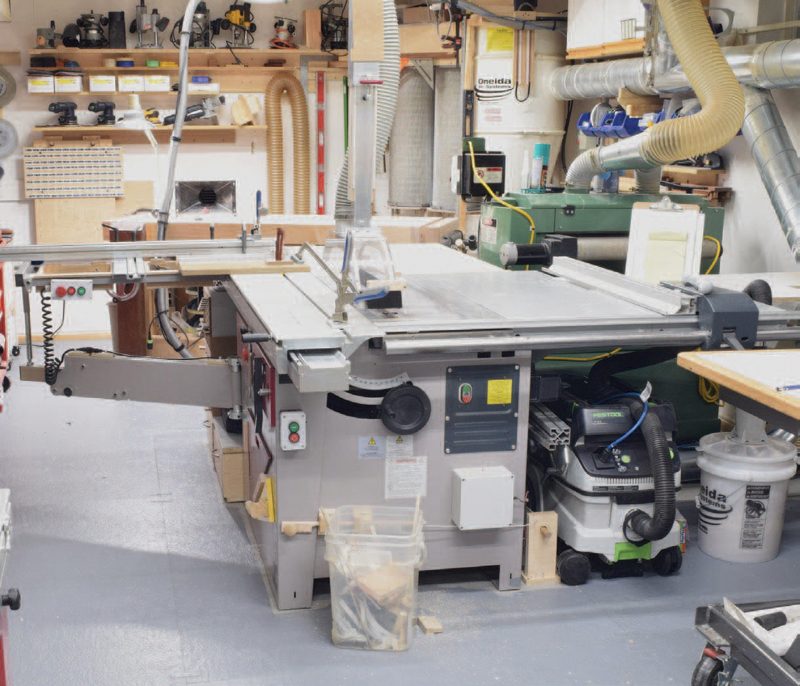
Moving large equipment into a basement shop can be a challenge. A moving dolly works for some equipment, but movers were hired to get this sliding table saw into Bedrosian’s shop.
Consider Infeed and Outfeed
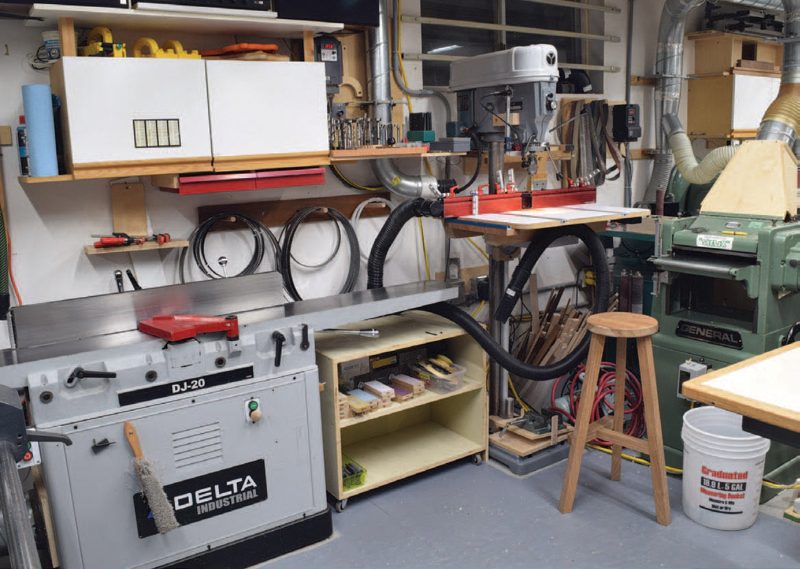
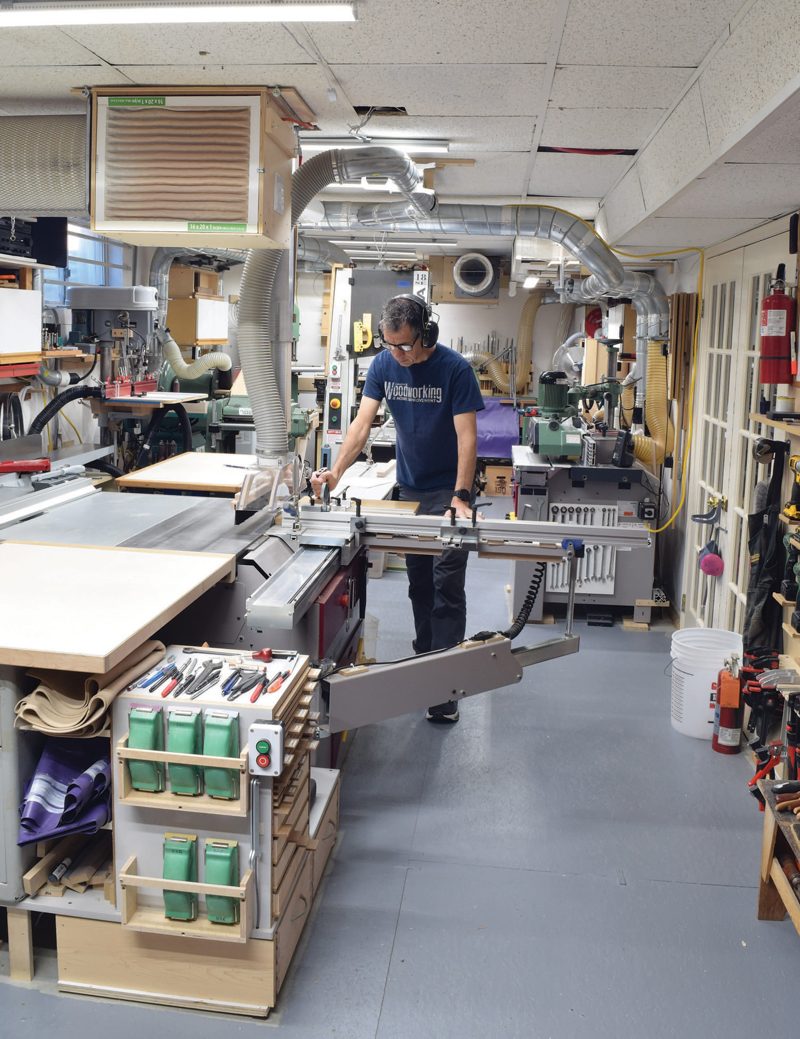
Machines can be arranged within a relatively tight space to allow for an efficient workflow. Bedrosian’s planer and jointer are close together, and there was space between them for his drill press. Push blocks for the jointer are kept above a cabinet so they’re always within reach.
Keep It Close
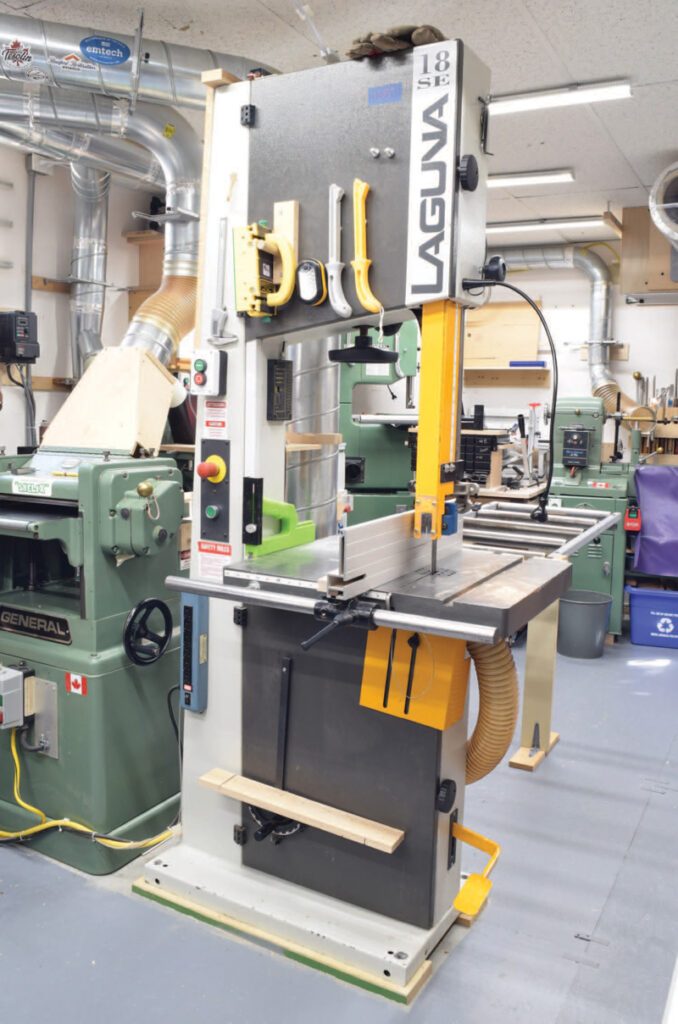
Magnets are effective for holding push sticks and adjusting tools on the machine where they’ll be used. Notice the base Bedrosian added under his bandsaw. It brings the bandsaw’s table up to the same height as his table saw, allowing it to double as an outfeed table.
Staggered Heights
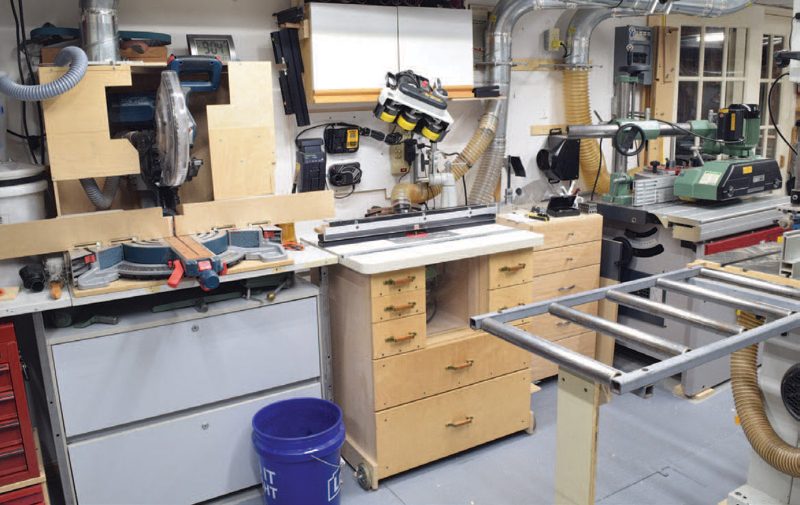
Raising or lowering machines can help them work within a smaller space. Bedrosian’s router table is low enough so that it doesn’t interfere when he’s working with long boards at his shaper or mitre saw. The router table can be pulled forward to rout long boards.
Surface-Mounted Outlets
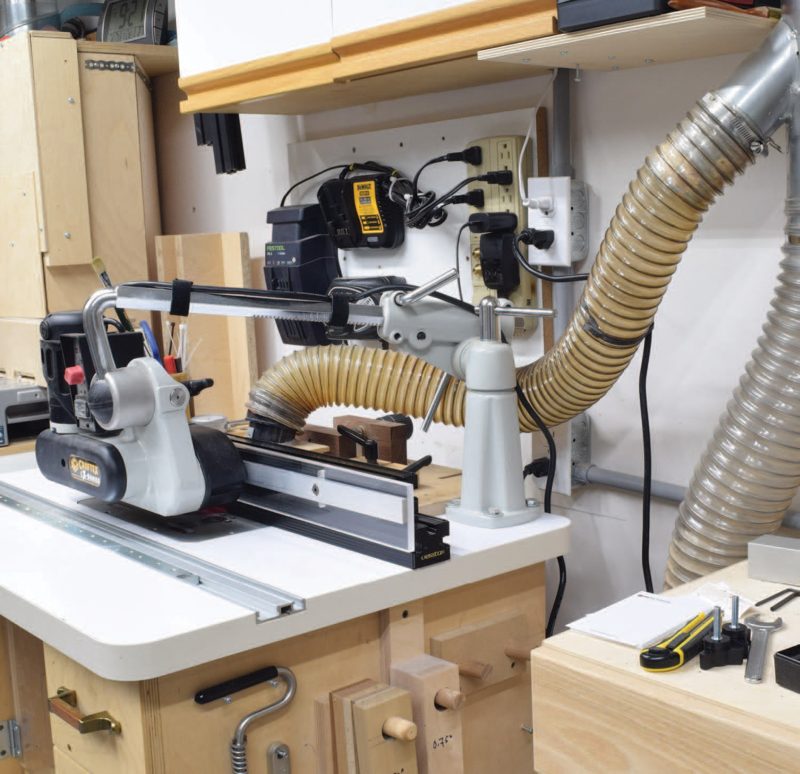
Don’t skimp on the number of outlets in your shop. Bedrosian uses surface-mounted outlets connected with conduit and positions them at a height that works well for different machines.
Narrow Shelves
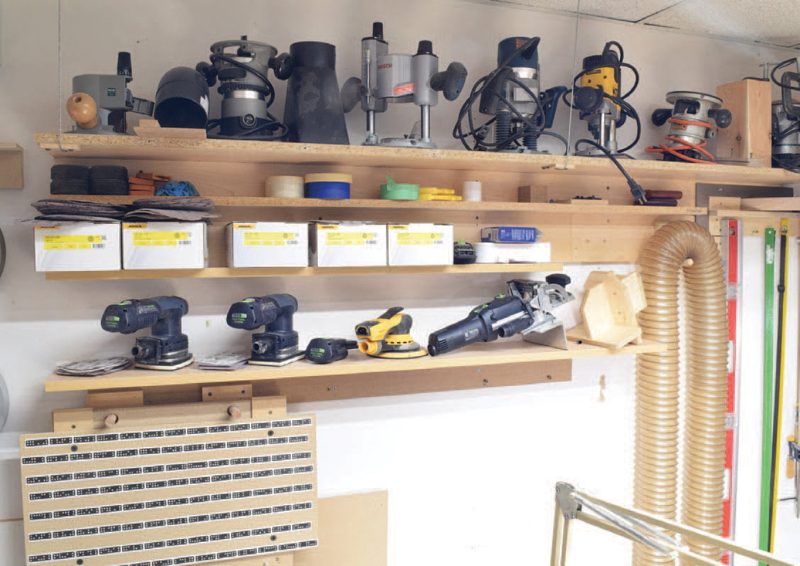
Narrow shelves attached to the wall take up minimal space but add a lot of storage for power tools and accessories. Wider shelves can be used higher up to hold larger tools such as routers.
Suck Some Serious Air

A cyclone dust collector with two pleated filters clears the dust and chips from the various machines in Bedrosian’s shop. An underpowered dust collection system isn’t going to do you many favours.
Custom Storage
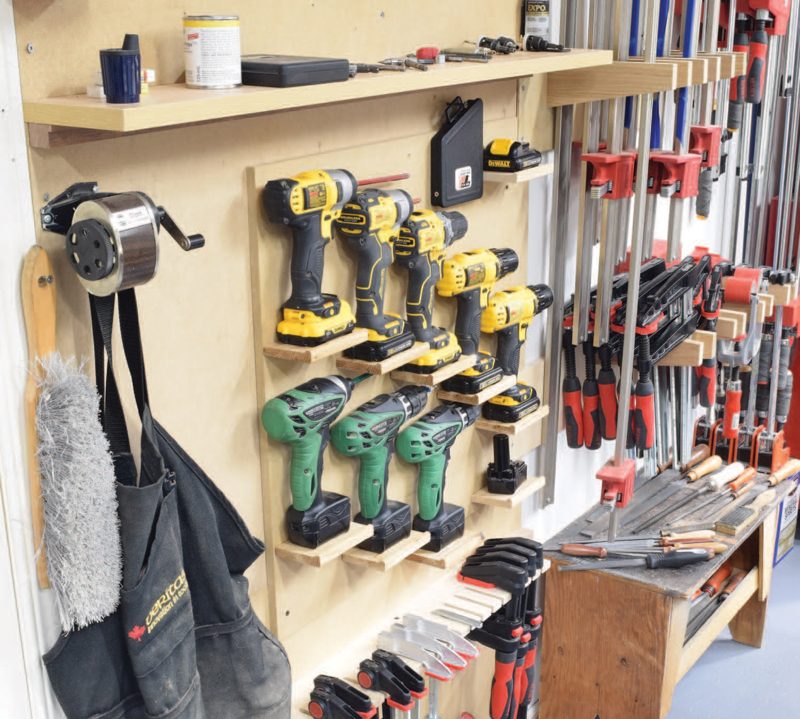
Bedrosian stores his drills and drivers on small individual shelves so they’re tight to the wall but are quick to grab when needed.
Dedication
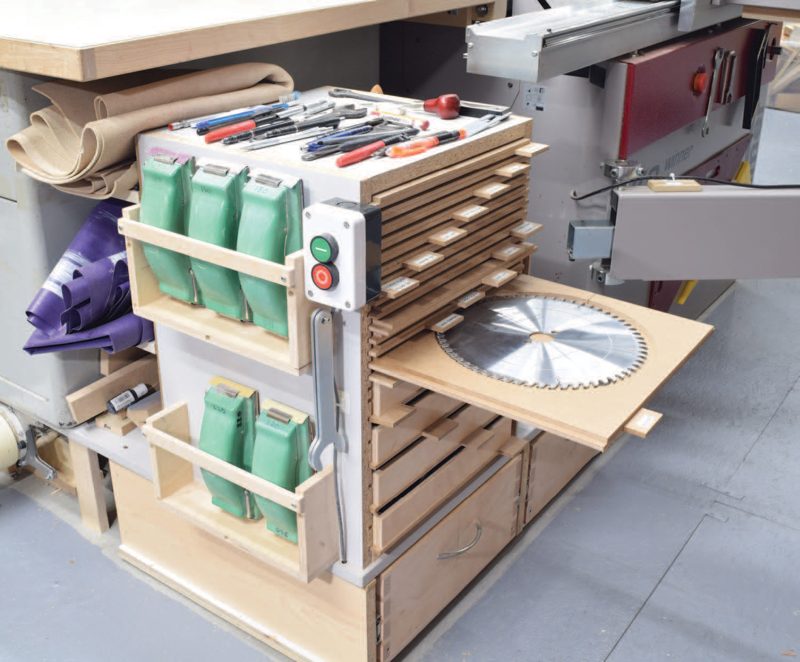
Storage is key in a well-organized shop. Bedrosian made a simple melamine cabinet with hardboard shelves to hold his table saw blades. A small rack on the end holds sanding blocks.
Sandpaper, Etc.
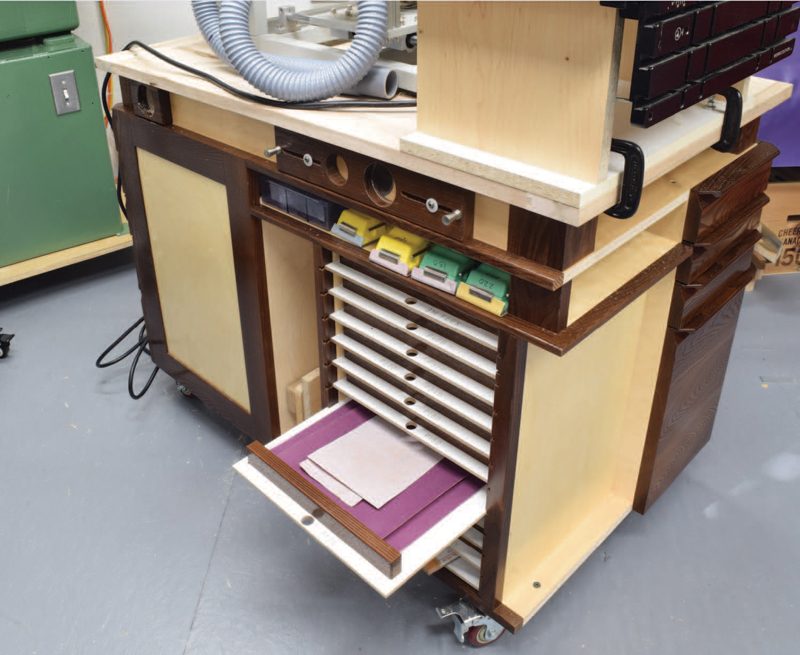
Bedrosian had space in a work cart to add storage for sheets of sandpaper. Each hardboard tray holds a different grit of paper with the grit engraved on the front. This general approach can be used for many smaller shop items like screws, dowels, sanding disks and other smaller bits and pieces.
Sometimes Simple Is Best
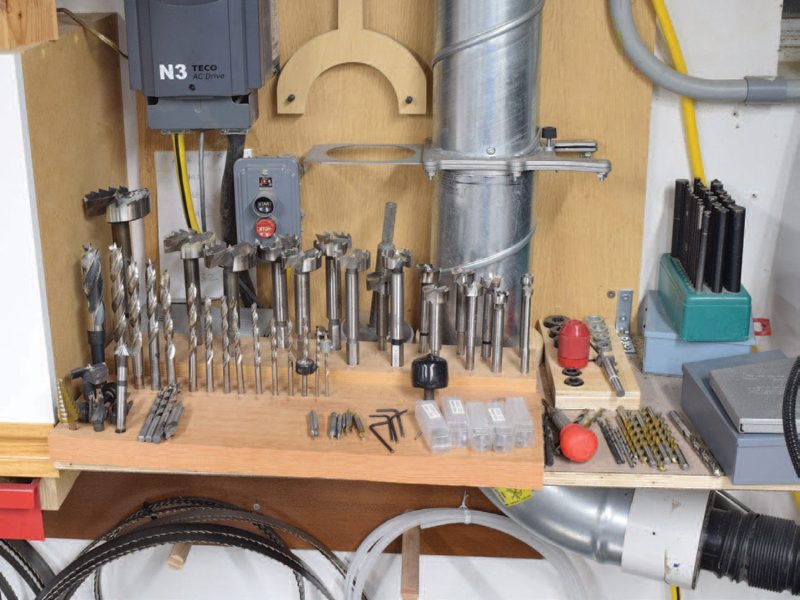
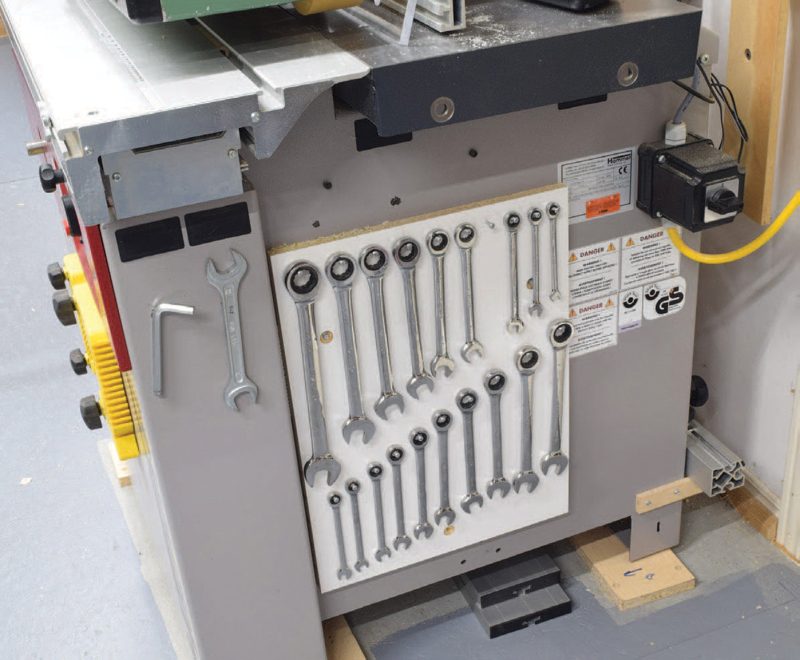
Simple storage solutions often work just as well. Good examples of simplicity are this board with screws to hold wrenches and a few blocks of wood to hold drill bits.
Quotes from David Bedrosian
Our video of the work of David Bedrosian